For whisky enthusiasts travelling to the Scottish Highlands, the journey is often just as important as the dram itself. While regions like Speyside offer a dense concentration of famous names, venturing further north reveals distilleries shaped entirely by the rugged coastline and maritime history. One such destination is the Old Pulteney distillery in Wick, Caithness.
Known affectionately across the globe as the Maritime Malt, this Highland single malt captures the essence of the North Sea in every glass. Travelling from Inverness to the far north of Scotland requires planning and local knowledge.
Undertaking a private highland whisky tour transforms the drive up the east coast into an unforgettable exploration of ancient landscapes, local history, and exceptional spirits.
The History of the Maritime Malt
To understand Old Pulteney, one must first understand the coastal town of Wick. During the nineteenth century, Wick was the undisputed herring capital of Europe. The harbour was famously so packed with fishing boats that it was said a person could cross the bay simply by stepping from deck to deck.
Established in 1826 by James Henderson, the distillery was originally built to quench the thirst of the massive seasonal workforce that descended on the town. At the time, the distillery was largely inaccessible by road.
The barley was brought in by sea, and the whisky was shipped out the same way. This deep connection to the ocean is not just historical; it is entirely fundamental to the character of the whisky produced today. You can read more about their extensive maritime heritage on the official Old Pulteney website (https://oldpulteney.com).
The Unique Still Design
A distillery tour at Old Pulteney offers a glimpse into a highly unusual production process. When you step into the still house, the first thing you will notice is the peculiar shape of the wash still. Legend dictates that when the original still was delivered to the distillery, it was simply too tall for the building. Rather than rebuilding the roof, the distillery manager decided to cut the top off the swan neck.
The resulting flat-topped still, combined with a purifier that returns heavier alcohols to the boiling pot, creates a spirit that is uncommonly robust and characterful. This heavy, oily new make spirit is perfectly suited to long maturation in cold, coastal warehouses.

Maturation in the Caithness Air
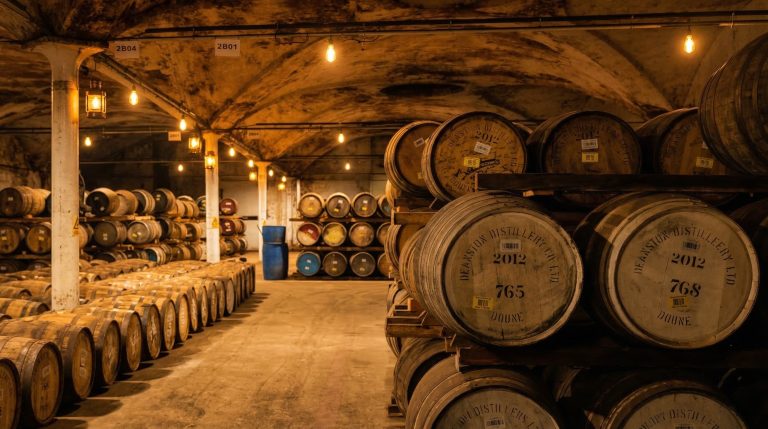
The true magic of the Maritime Malt happens during maturation. The traditional dunnage warehouses in Wick are continually exposed to the relentless North Sea winds.
As the casks breathe over the years, they absorb the salty, briny coastal air. This environmental influence imparts a distinct saline note to the finished whisky, a subtle saltiness that perfectly balances the sweet vanilla, honey, and butterscotch flavours drawn from the oak casks.
The Core Range and Tasting Experience
A visit to the distillery is not complete without exploring their award-winning core range in the tasting room. The classic 12 Year Old expression is the perfect introduction to the distillery character, maturing entirely in air-dried, hand-selected ex-bourbon casks. It presents a vibrant, warming profile with notes of honey, fresh citrus, and that unmistakable pinch of sea salt on the finish.
Moving up the age statements, the 15 Year Old offers a more complex, balanced experience, having spent time in both American oak ex-bourbon casks and Spanish oak ex-oloroso sherry casks. This dual maturation introduces rich layers of dark chocolate, green apples, and a warming spice that complements the coastal salinity beautifully.
During a premium tasting session, the distillery experts will walk you through these subtle nuances, explaining how the wood policy and the harsh Caithness environment interact over decades to create a truly unique Highland single malt.

The Scenic Route from Inverness
A visit to Wick is not simply a distillery tour; it is a spectacular Highland road trip. Departing from Inverness, the capital of the Highlands, the route follows the eastern leg of the famous North Coast 500 (https://www.northcoast500.com).
The journey takes you across the Black Isle, over the Cromarty Firth, and across the Dornoch Firth. As a local guide will tell you, the east coast offers a completely different atmosphere to the rugged west. Here, you will find rich agricultural land, sweeping sandy beaches, and dramatic sea cliffs.
Travelling with a knowledgeable guide means you can stop at hidden gems along the way. A popular detour is the magnificent Dunrobin Castle (https://www.dunrobincastle.co.uk) in Golspie, with its French-inspired chateau architecture, falconry displays, and stunning coastal gardens. Further north, the landscape becomes wilder and more remote as you enter the ancient county of Caithness, known for its expansive peatlands and dramatic coastline.
Local Insights for the Perfect Trip
Navigating the Highland roads requires a bit of local expertise. The A9 north of Inverness can be busy during the peak summer months, largely due to the popularity of the coastal driving routes. An experienced driver knows exactly how to pace the journey, avoiding the busiest traffic pinch points while ensuring you arrive at the distillery in perfect time for your scheduled tasting.
Weather in the far north is famously changeable. Even in high summer, the sea haar (a cold coastal fog) can roll in quickly off the North Sea. Packing layered clothing is essential when visiting Wick, as the distillery courtyard and surrounding coastal viewpoints can be bracing.
When visiting the area, a local guide might also suggest a brief stop at the Whaligoe Steps, a dramatic descent of over 300 stone steps carved into the cliff face by local fisherwomen in the nineteenth century. It is details like these that elevate a simple transit into a truly immersive Highland experience.
Why Choose a Private Tour
Embarking on a long-distance distillery visit presents a common problem: who is going to drive? Scotland has strict drink-driving laws, meaning the designated driver must completely miss out on the tasting experience.
Booking a private tour solves this issue entirely. You can relax in comfort, enjoy the stunning coastal scenery, and participate fully in the warehouse tastings without worrying about navigating unfamiliar single-track roads or the drive back to your accommodation in Inverness.
By choosing a dedicated itinerary, you benefit from a completely tailored experience. If you wish to spend more time exploring the historic town of Wick, walking along the harbour, or taking photographs at Duncansby Head after your tasting, the schedule is yours to control. Discover more about creating your perfect day out on our dedicated private Old Pulteney whisky tour (https://highlanderwhiskytours.com/old-pulteney-distillery) page.
Frequently Asked Questions
Where is the Old Pulteney distillery located?
The distillery is situated in the coastal town of Wick, in the historic county of Caithness, right in the far north-east of the Scottish Highlands.
How long does it take to drive from Inverness to Wick?
The drive typically takes around two and a half hours without stopping. However, the route is incredibly scenic, and most visitors choose to make several sightseeing stops along the way, turning the journey into a full-day cultural experience.
What makes Old Pulteney whisky taste salty?
The whisky derives its signature maritime flavour from the coastal warehouses where the casks are stored. Over many years of maturation, the wooden casks breathe in the salty, briny air blowing directly off the North Sea.
Do I need to book a distillery tour in advance?
Yes, it is highly recommended to book your distillery tour well in advance, especially during the summer months when the North Coast 500 route is at its busiest. Warehouse tastings and premium tours often sell out weeks ahead of time.
When is the best time of year to visit Caithness?
Late spring through to early autumn offers the best chance of clear weather and long daylight hours. May and September are particularly beautiful months to visit, often providing pleasant weather with slightly fewer crowds than July and August.
Can we visit other distilleries on the way to Wick?
Absolutely. The east coast route passes several other notable Highland distilleries, including Glenmorangie, Balblair, and Clynelish. A bespoke tour itinerary can easily incorporate a brief stop or a secondary tasting at another location, depending on your schedule and preferences.
Is Old Pulteney a peated whisky?
The core range of Old Pulteney is unpeated, focusing instead on coastal salinity, honeyed sweetness, and citrus notes. However, they do occasionally release lightly peated expressions, often matured in casks that previously held peated whisky, which adds a gentle wisp of campfire smoke to the traditional maritime profile.
Planning Your Highland Whisky Adventure
Visiting the Maritime Malt is a pilgrimage for anyone who appreciates the deep connection between a whisky and its environment. The journey to Wick offers an incredible blend of Highland history, dramatic coastal scenery, and world-class spirit.
If you are planning a trip to the Scottish Highlands and wish to explore the far north without the stress of driving, we are here to help. Reach out to Highlander Whisky Tours to discuss your bespoke itinerary, and let us guide you along the unforgettable east coast to experience the very best of Scottish whisky in comfort and style.